
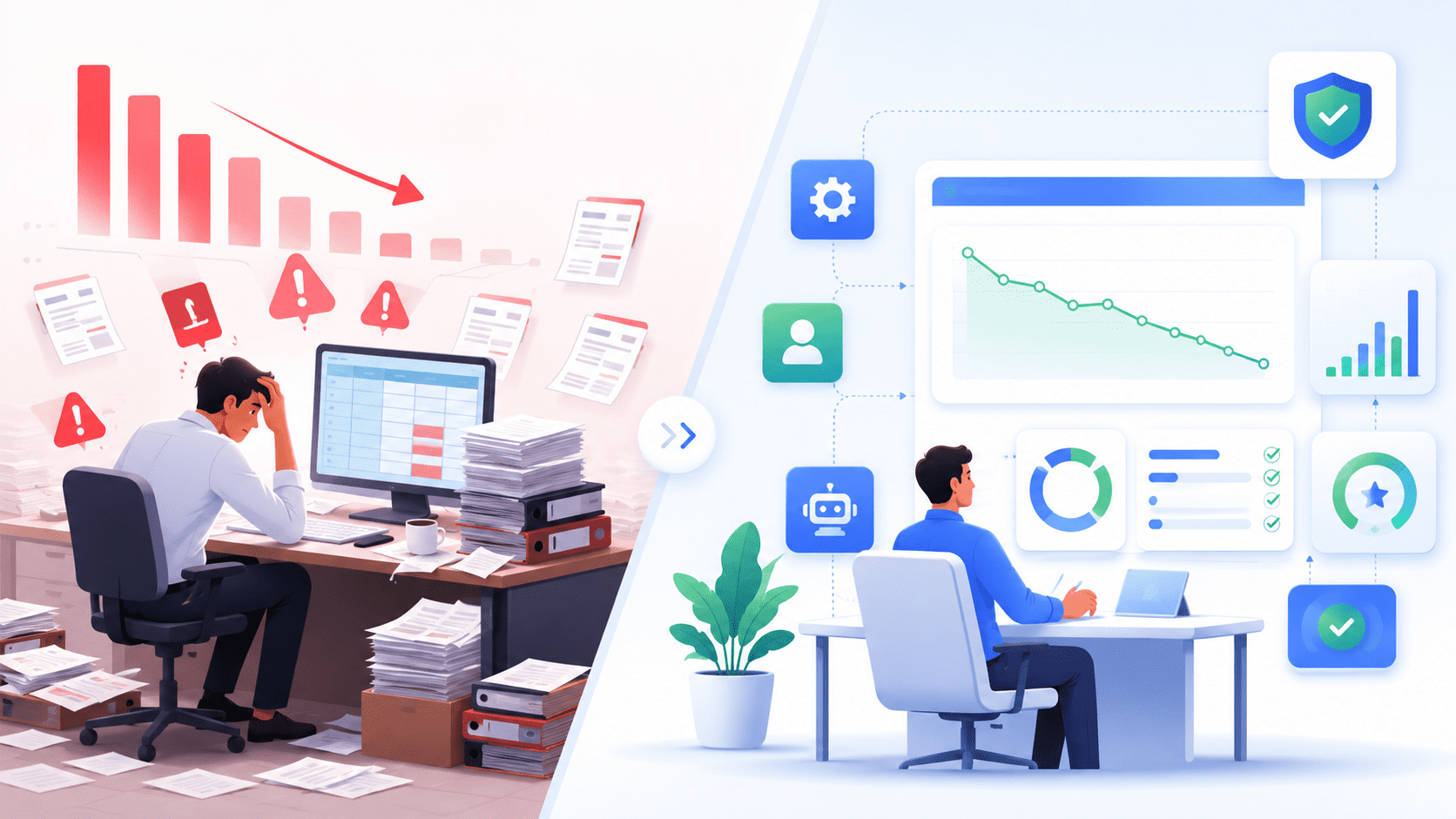
If you’re running a finance or AR function, Bad Debt Expense isn’t just an accounting term—it’s lost revenue, broken cash flow, and avoidable risk.
In simple terms, Bad Debt Expense refers to the portion of receivables that your business does not expect to collect. But the real problem? Most companies only react to it—long after the damage is done.
Let’s break down what it means, how to calculate it, and more importantly, how to control it before it spirals.
Table of Contents
What Is Bad Debt Expense?
Bad Debt Expense is recorded when a business determines that a customer invoice is unlikely to be paid.
This typically happens due to:
- Customer insolvency
- Disputes or billing issues
- Poor credit evaluation
- Inefficient collections processes
From an accounting standpoint, it ensures your financial statements reflect realistic revenue—not just billed revenue.

Why Bad Debt Matters More Than You Think?
Bad debt isn’t just a write-off—it’s a signal.
When it rises, it usually points to deeper issues:
- Weak credit controls
- Delayed follow-ups
- Lack of visibility into receivables
- Manual, inconsistent processes
Left unchecked, it impacts:
- Cash flow predictability
- Working capital
- Investor confidence
How to Calculate Bad Debt Expense?
There are two common ways businesses calculate Bad Debt Expense:
1. Percentage of Sales Method
You estimate bad debt as a percentage of total credit sales.
For example:
If your credit sales = ₹10,00,000
And estimated bad debt = 2%
Bad Debt Expense = ₹20,000
2. Aging of Receivables Method
This method is more accurate and widely used.
How it works:
- Categorize invoices by age (0–30, 31–60, 61–90, 90+ days)
- Assign higher risk percentages to older invoices
- Estimate uncollectible amounts accordingly
This approach gives better visibility into where risk is building.
Tracking Bad Debt Expense Effectively
Tracking bad debt isn’t just about reporting—it’s about predicting.
What to monitor:
- % of receivables turning overdue
- Aging bucket movement
- Customer payment behavior trends
- Dispute frequency and resolution time
The problem most teams face:
Data is scattered across spreadsheets, ERPs, and emails—making real-time tracking nearly impossible.
How to Reduce Bad Debt Expense (Practically)
Here’s where most blogs stay theoretical. Let’s get practical.
1. Strengthen Credit Evaluation
Don’t rely on gut feel. Use:
- Credit scoring models
- Payment history data
- External credit reports
2. Automate Payment Reminders
Manual follow-ups = inconsistent collections.
Automated reminders:
- Reduce delays
- Maintain professionalism
- Increase on-time payments
3. Improve Dispute Resolution Speed
Unresolved disputes often become bad debt.
Fix this by:
- Centralizing dispute tracking
- Assigning ownership
- Setting SLAs for resolution
4. Offer Flexible Payment Options
Make it easier for customers to pay:
- Bank transfers
- UPI
- Cards
Friction in payments = delayed collections.
5. Get Real-Time Visibility
You can’t fix what you can’t see.
A modern AR system should show:
- Risky accounts
- Collection bottlenecks
- Predicted defaults
The Bigger Shift: From Reactive to Predictive AR
Most companies treat bad debt as an end-of-cycle adjustment. High-performing finance teams treat it as a preventable outcome.
That shift requires:
- Data visibility
- Automation
- Structured workflows
Where FinFloh Fits In?
This is exactly where FinFloh changes the game.
Instead of chasing payments manually, finance teams use FinFloh to:
- Automate collections workflows
- Track receivables in real-time
- Identify high-risk accounts early
- Reduce DSO and bad debt leakage
The result? More predictable cash flow—and fewer unpleasant surprises.
If bad debt is quietly eating into your revenue, it’s time to get ahead of it—not just account for it.
Book a demo with FinFloh and see how you can reduce bad debt while improving collections efficiency.
About FinFloh
FinFloh is a modern Accounts Receivable platform that helps businesses streamline their Credit-to-Cash cycle. From automated collections and real-time insights to dispute management and payment orchestration, FinFloh enables finance teams to reduce DSO, improve cash flow, and minimize bad debt—all from a single platform.