Category: Accounting
-
5 Risks Accounts Receivable Teams Face Today

Managing receivables is no longer just about sending invoices and waiting for payments. Today, finance teams face multiple accounts receivable risks that directly impact cash flow, customer relationships, and business growth. From delayed payments to fraud and inaccurate reporting, even a small inefficiency in accounts receivable can create major financial…
-
What Is Pledging Receivables? Explained Simply
Cash flow is one of the biggest challenges growing businesses face. Even profitable companies can struggle when customer payments are delayed. That’s where pledging receivables comes into the picture. Pledging receivables allows businesses to use unpaid invoices as collateral to secure short-term financing. Instead of waiting 30, 60, or even…
-
CapEx vs OpEx: Finding the Right Balance for Business Growth
Every growing business eventually faces the same financial question:Should we invest heavily in long-term assets or keep operations flexible with ongoing expenses? Finding the right balance between CapEx and OpEx is critical for maintaining healthy cash flow, improving operational efficiency, and scaling sustainably. While both play an important role in…
-
Cash vs. Accrual Accounting: Which Method Helps Businesses Grow Faster?
Managing business finances is not just about tracking money — it’s about understanding when revenue and expenses truly impact your business. That’s where Cash vs. Accrual Accounting becomes one of the most important decisions for finance teams. Many businesses start with cash accounting because it feels simple and straightforward. But…
-
Accounts Receivable Financing: Unlock Cash Flow Fast
Cash flow gaps can quietly slow down even the fastest-growing businesses. That’s where accounts receivable financing comes in—it helps you access cash tied up in unpaid invoices without waiting 30, 60, or even 90 days. If your revenue looks strong but your bank balance tells a different story, this guide…
-
Accounts Receivable Automation in Sage X3
Sage X3 is a powerful ERP organizations use for complex operations; particularly organizations in manufacturing, distribution, and supply chain-heavy environments. It offers broad capabilities across finance, inventory, production, and procurement, making it a strong system for running end-to-end business processes. However, when it comes to accounts receivable, the focus of…
-
Accounts Receivable Automation in Sage Intacct
Sage Intacct is a modern, cloud-native ERP widely used by growing businesses for financial management. It offers strong capabilities across general ledger, accounts payable, and accounts receivable, along with robust reporting and multi-entity support. However, as transaction volumes increase and receivables processes become more complex, finance teams often encounter limitations…
-
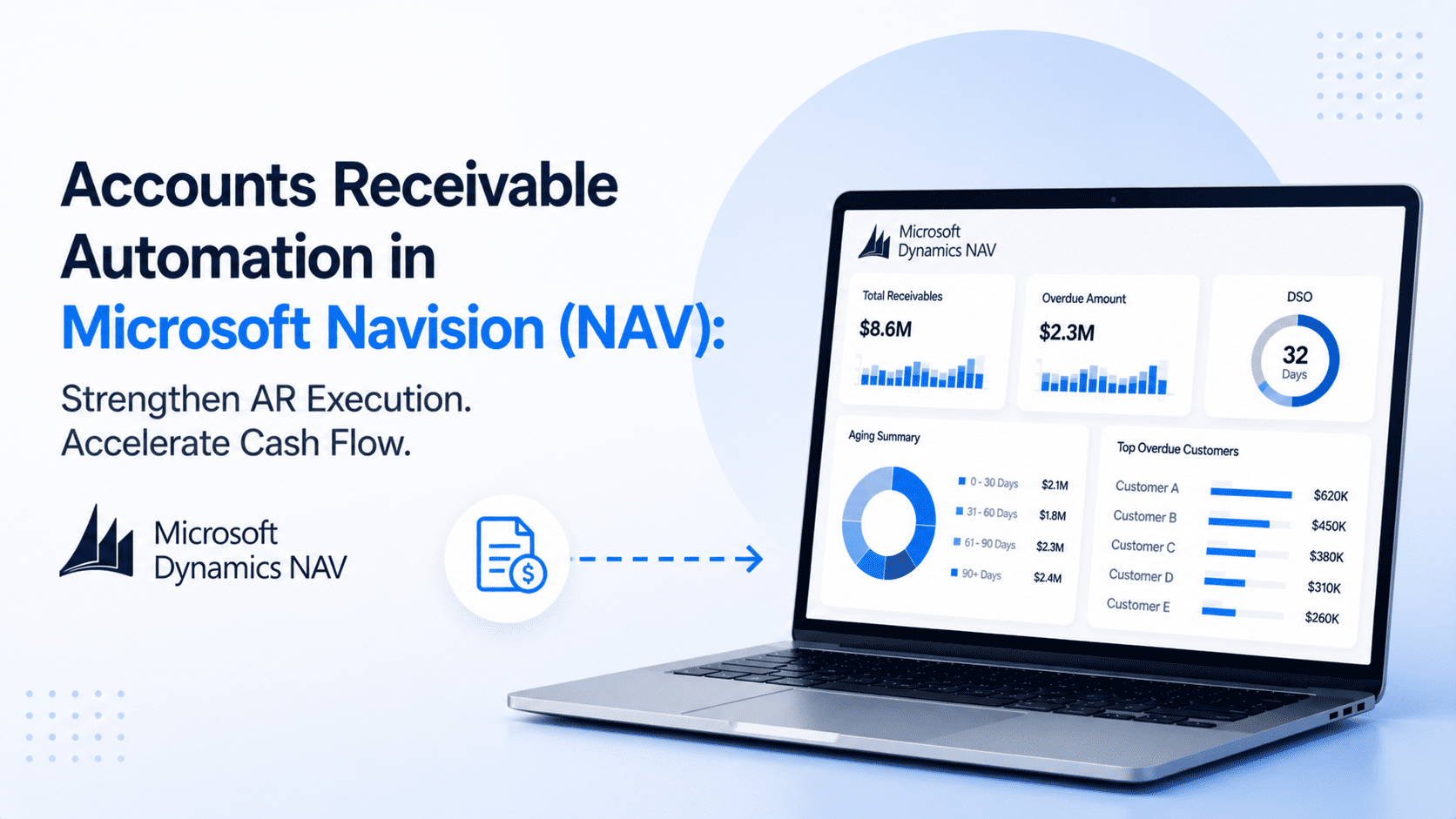
Accounts Receivable Automation in Microsoft Navision (Microsoft Dynamics NAV)
Microsoft Dynamics NAV (Navision) has long been a reliable ERP for finance teams, particularly across small and mid-sized businesses. It provides a strong foundation for managing invoices, tracking receivables, and maintaining financial records. However, as receivables processes grow in complexity and volume, finance teams often find themselves working outside the…
-
Accounts Receivable Automation in SAP Business ByDesign
SAP Business ByDesign is a cloud-based ERP built for mid-sized and growing businesses. It offers integrated capabilities across finance, procurement, sales, and operations, making it an attractive option for companies looking to manage their business on a single platform. While it provides strong functionality for managing accounts receivable data, many…
-
Accounts Receivable Automation in SAP Business One
SAP Business One is a widely adopted ERP for small and mid-sized businesses, offering a unified platform for managing finance, operations, and customer data. It provides essential capabilities for accounts receivable, including invoicing, payment tracking, and customer management. However, as businesses scale and receivables processes become more complex, finance teams…