Category: Invoice to Cash
-
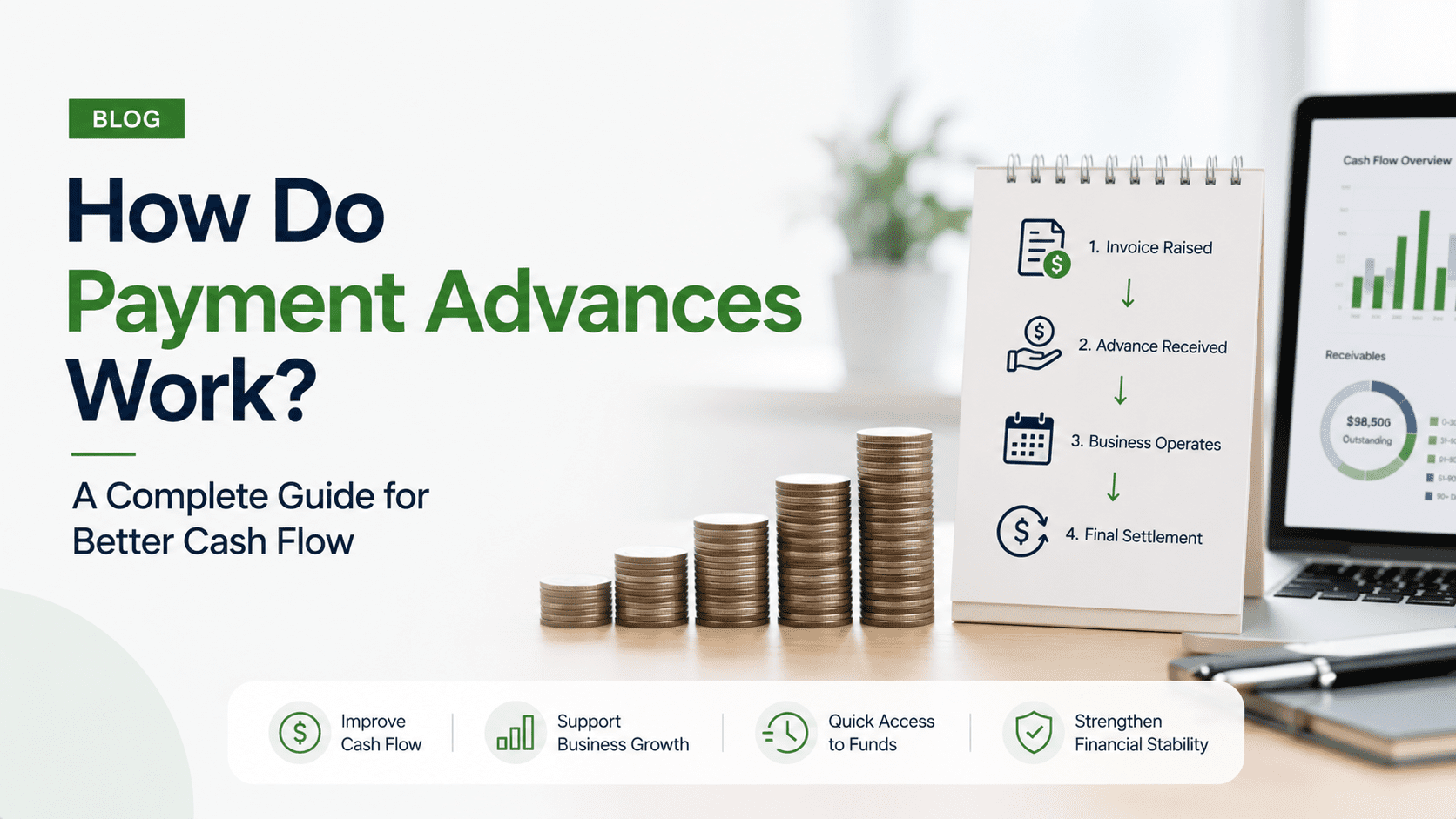
How Do Payment Advances Work? A Complete Guide for Businesses

Managing cash flow is one of the biggest priorities for businesses. Even profitable companies can face liquidity challenges when customer payments are delayed, invoices remain outstanding, or operational expenses arise before revenue is collected. This is where payment advances become important. Payment advances help businesses access funds earlier, improving working…
-
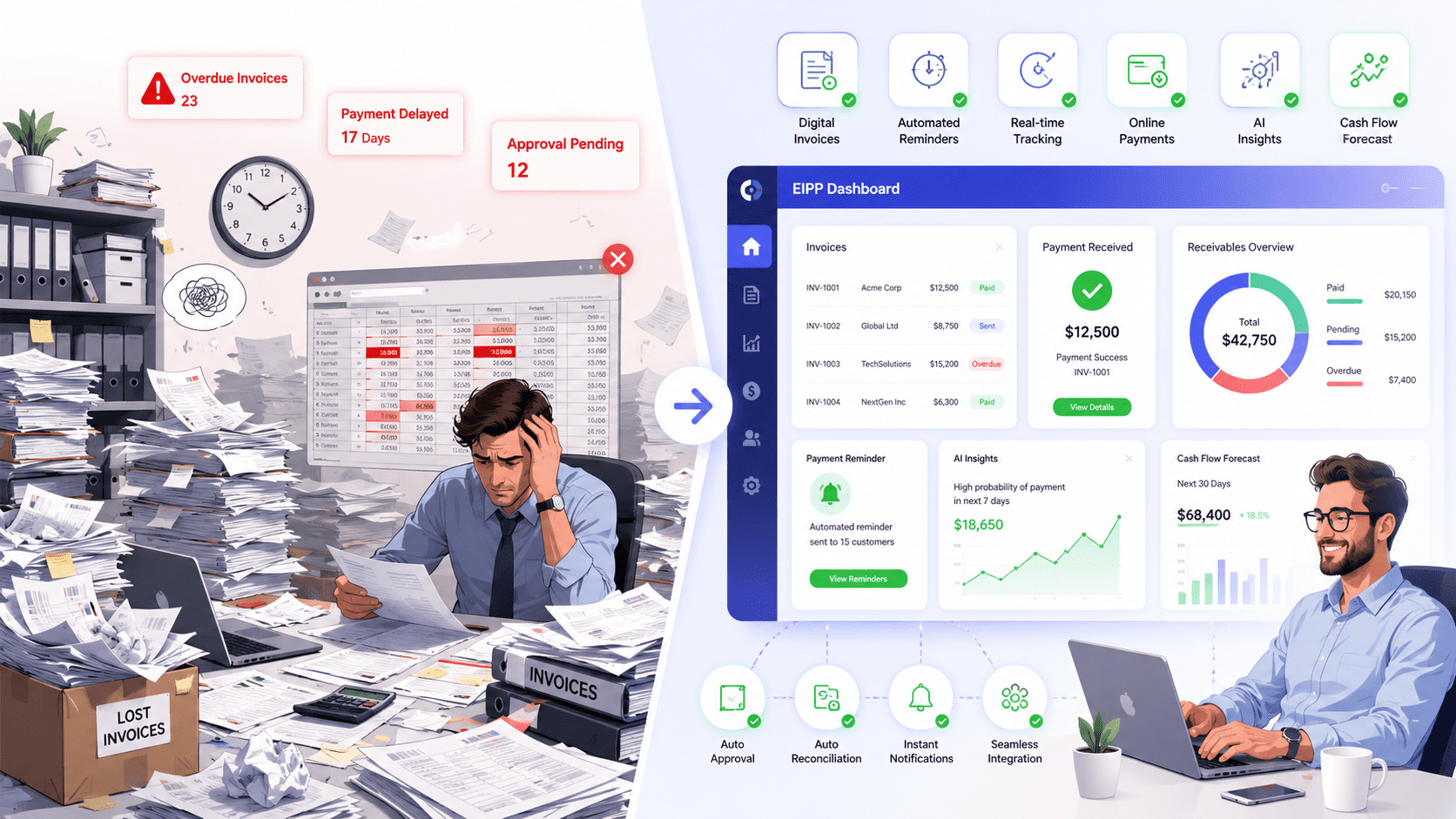
How EIPP Invoices Work: The Smarter Way to Automate B2B Billing
Managing invoices manually can slow down payments, increase errors, and create unnecessary pressure on finance teams. That’s why many businesses are now shifting toward EIPP invoices to simplify billing and improve accounts receivable efficiency. Electronic Invoice Presentment and Payment (EIPP) helps businesses digitally send invoices, track payments in real time,…
-
Direct vs Indirect Cash Flow Methods: Which One Gives Better Financial Visibility?
Cash flow is the heartbeat of every business. Revenue may look strong on paper, but if cash isn’t flowing consistently, operations slow down, growth gets delayed, and financial pressure builds quickly. That’s why understanding Direct vs Indirect Cash Flow Methods matters more than ever. These two accounting approaches shape how…
-
Cash Runway Explained: How Long Can Your Business Survive?
If you’ve ever wondered how long your business can survive without new revenue, you’re really asking about your cash runway. Cash runway is the amount of time your company can continue operating before it runs out of cash, assuming current expenses and no additional income. It’s one of the most…
-
Convenience Fee Explained & How to Avoid It?
A convenience fee is a small charge added when you choose a specific payment method that’s considered more “convenient” than the standard option. You’ll usually see it when: In simple terms, a convenience fee covers the extra cost businesses incur for offering flexible payment options. Table of Contents Why Do…
-
Credit Card Processing Fees: What You’re Really Paying For
If you’ve ever accepted payments online or via card, you’ve already paid credit card processing fees—even if you didn’t fully notice them. These fees quietly chip away at your revenue with every transaction. For businesses managing high volumes or tight margins, understanding credit card processing fees isn’t optional—it’s essential. Let’s…
-
Accounts Receivable Financing: Unlock Cash Flow Fast
Cash flow gaps can quietly slow down even the fastest-growing businesses. That’s where accounts receivable financing comes in—it helps you access cash tied up in unpaid invoices without waiting 30, 60, or even 90 days. If your revenue looks strong but your bank balance tells a different story, this guide…
-
EDI in Accounts Receivable: Applications, Benefits, and Modern Use Cases
Accounts receivable (AR) processes are often slowed down by fragmented communication—emails, PDFs, spreadsheets, and manual data entry. As transaction volumes grow, these inefficiencies directly impact cash flow, accuracy, and scalability. Electronic Data Interchange (EDI) addresses this challenge by enabling structured, system-to-system communication between businesses. In AR, EDI plays a critical…
-
Applications of OCR in Accounts Receivable
Accounts receivable (AR) processes often involve large volumes of unstructured data—emails, PDFs, scanned invoices, bank statements, and remittance advice documents. Manually extracting and processing this information is time-consuming, error-prone, and difficult to scale. Optical Character Recognition (OCR) has emerged as a critical technology in modern AR operations, enabling finance teams…
-
Accounts Receivable Automation in Sage X3
Sage X3 is a powerful ERP organizations use for complex operations; particularly organizations in manufacturing, distribution, and supply chain-heavy environments. It offers broad capabilities across finance, inventory, production, and procurement, making it a strong system for running end-to-end business processes. However, when it comes to accounts receivable, the focus of…